Transforming a house into a space that is both comfortable and aesthetic is not just about choosing pretty cushions or trendy paint. The real comfort of an interior depends on often invisible parameters: air quality, the perceived temperature according to the seasons, and sound insulation between rooms. These factors condition daily well-being far more than any decorative choice.
Insulation and summer comfort: the trap of poorly calibrated renovation
When looking to improve the thermal comfort of a home, the common reflex is to enhance insulation. The goal is logical: reduce heat loss in winter. However, insulation installed without considering solar protection, ventilation, and the building’s thermal mass can significantly degrade comfort in summer.
Living spaces that overheat as early as spring sometimes require the installation of air conditioning, which negates some of the energy savings. Insulation should be thought of in conjunction with the entire structure, not as an isolated action.
For anyone considering renovating their living room, bedroom, or attic, it is better to start with a comprehensive assessment. The DPE (energy performance diagnosis) provides information on existing insulation, window orientation, heating system, and ventilation. It is a concrete starting point to prioritize work before moving on to decoration, and one can consult Scoopium for the home to explore different approaches to interior design.
Ventilation and indoor air quality: an underestimated comfort lever
After enhancing the airtightness of a dwelling, ventilation becomes a critical issue. Insufficient ventilation degrades air quality and promotes the growth of mold, especially in the bathroom, kitchen, and rooms with little exposure to natural light.
This point is rarely addressed in decoration articles. There is talk of scented candles and green plants, but the first condition for a pleasant interior is healthy air. Properly sized air renewal reduces ambient humidity, limits persistent odors, and improves the feeling of freshness without resorting to air conditioning.
For an older house, transitioning to a VMC (controlled mechanical ventilation) suited to the volume of spaces represents a moderate investment that profoundly changes daily comfort. In a recent construction compliant with RE 2020, ventilation is usually integrated from the design stage, but it requires regular maintenance to remain effective.
Colors and natural light: adapting decor to room orientation
The choice of wall colors and lighting is not just a matter of taste. It directly depends on the orientation of each room and the amount of natural light available.
A north-facing living room receives cold, diffuse light all day. Warm shades (ochre, terracotta, deep beige) compensate for this lack of visual warmth. Conversely, a south-facing bedroom bathed in sunlight can support cooler colors or off-whites without appearing austere.
The common mistake is to choose a decor palette from a catalog or screen, without considering the actual light reality of the space. Testing a paint sample directly on the relevant wall, at different times of the day, remains the most reliable method to avoid disappointment.
Here are some concrete guidelines for adapting decoration to light:
- North-facing room: favor warm colors and slightly satin surfaces that reflect light, avoid gray or bluish shades that accentuate coldness
- South-facing room: possibility of using deep colors (forest green, midnight blue) without darkening the space, provided the ceiling remains light
- Room with a single window: place a mirror opposite the opening to visually double the light source, and limit opaque curtains that block natural light
- Through living space (open living room-kitchen): play on two complementary color atmospheres rather than a uniform shade, using furniture as a transition
Textiles and acoustics: the comfort that is not visible
The comfort of an interior is also perceived by the ear. In a living room with a hard floor (tiles, polished concrete, solid wood), sounds bounce and create a tiring atmosphere, especially when several people occupy the space.
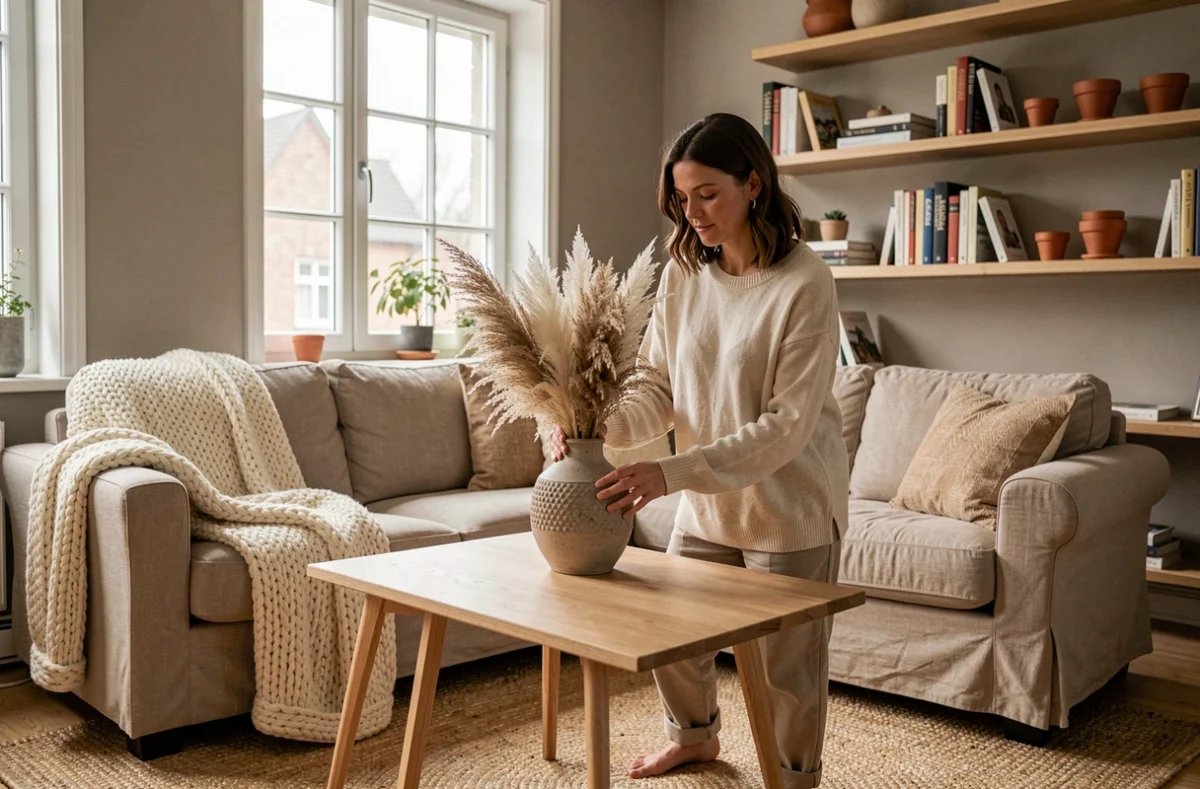
Textiles absorb a significant portion of reverberation noise. A thick rug in the center of the living room, heavy curtains at the windows, cushions on the sofa: these decorative elements play a real acoustic role. This is not just superfluous coziness; it is soft engineering.

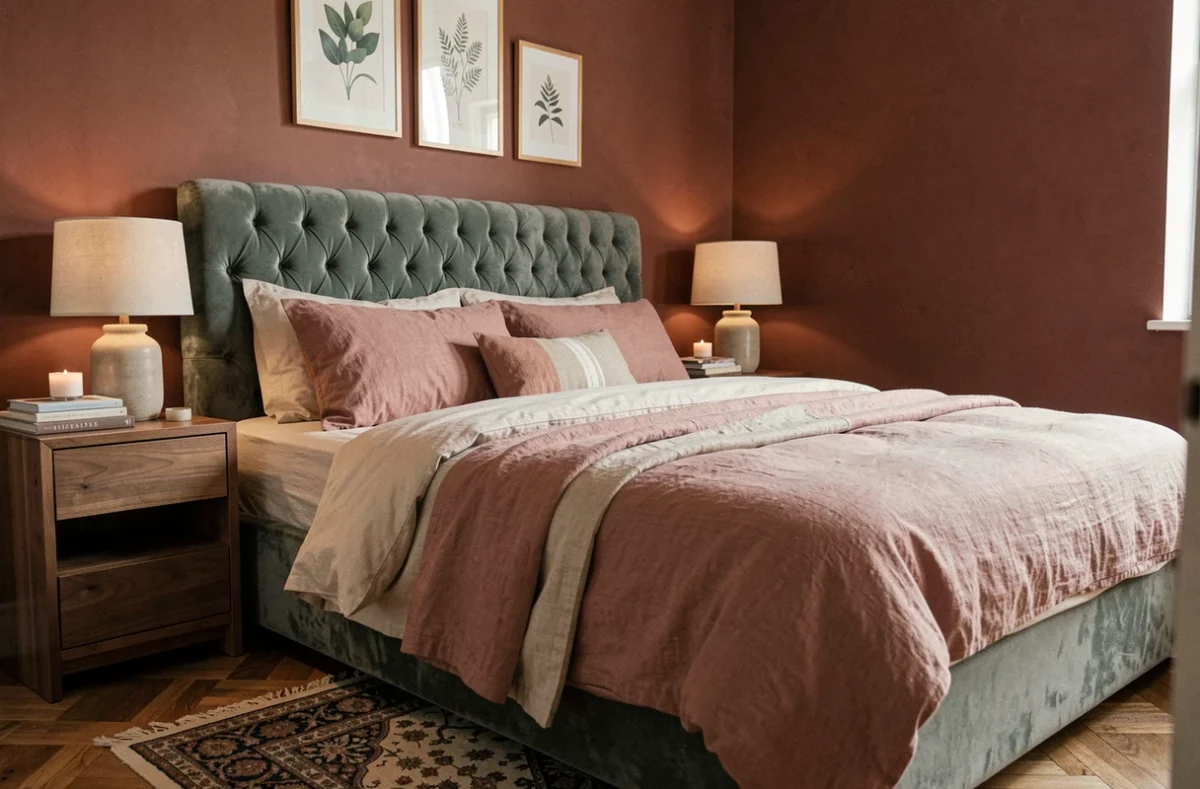
For a bedroom, the choice of bedding influences both thermal comfort and aesthetics. Natural materials (linen, thick cotton) regulate body temperature better than polyester, even if visually identical. In winter, a wool throw placed on the bed adds a layer of insulation without visually weighing down the room.
Acoustics also deserve special attention between rooms:
- Well-maintained door seals reduce sound transmission between the bedroom and hallway
- A bookshelf filled against a shared wall acts as a natural sound insulator
- Hollow partitions can be doubled with a thin acoustic panel without losing much living space
Energy efficiency of rental housing: a constraint that redefines renovation
For landlords, the Climate and Resilience Law imposes a timeline for energy efficiency that gradually prohibits renting the most energy-consuming properties. Renovating a rental property now involves balancing aesthetic, thermal, and regulatory issues.
This constraint changes the way to approach an interior transformation project. Redecorating an apartment rated F or G on the DPE without addressing insulation or ventilation amounts to masking a structural problem. Field reports vary on the actual cost of compliance depending on configurations, but the regulatory timeline leaves little room for maneuver.
Before choosing warm colors or cozy furniture for a rental property, the priority remains to ensure that the dwelling meets the current energy performance thresholds. Real comfort and legal compliance now go hand in hand.