
White vinegar is not a disinfectant. This misconception, common in most home-cleaning guides, leads people to use a descaling product where a biocide with a virucidal claim would be the only appropriate choice. Cleaning and disinfecting are two distinct tasks, involving different products and different contact times.
Cleaning without disinfecting: distinguishing routine cleaning from disinfection
Routine indoor cleaning involves physically removing dirt: dust, grease and limescale. A neutral detergent or an acidic product (white vinegar, citric acid) is enough for most surfaces in everyday use.
Disinfection, on the other hand, aims to inactivate microorganisms. It only makes sense in specific situations: after a bout of gastroenteritis, when a household member is immunocompromised, or on surfaces that have come into contact with high-risk raw foods. Disinfecting the entire home every week is unnecessary and exposes you to chemical residues without any proven health benefit.
For a product to genuinely disinfect, it must carry a biocidal claim (virucidal, bactericidal or fungicidal, depending on the need), and its instructions must specify a minimum contact time. Spraying a product and wiping it off immediately does not disinfect anything, whatever the product.
We recommend reserving disinfection for critical touchpoints (door handles, light switches, kitchen taps) and only when the situation calls for it. The rest of the time, home cleaning tips using detergent and microfiber are more than enough.
Mixing household cleaning products: dangerous combinations to avoid
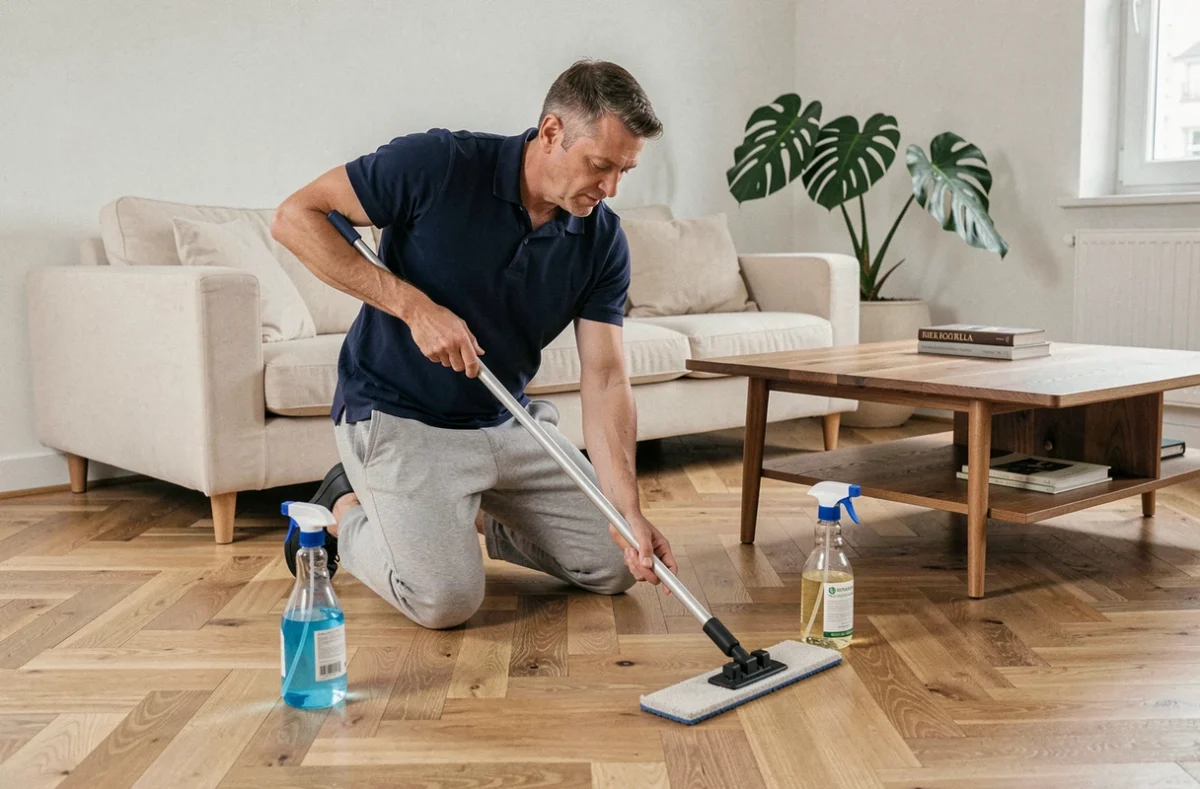
Mixing bleach with vinegar or a descaler can release chlorine gas. When combined with ammonia, bleach can form chloramines, which irritate the respiratory tract. These reactions can occur even with small amounts.
The rule is simple: never mix two household cleaning products, even if they seem harmless. The dramatic fizzing of a vinegar-and-baking-soda mixture does not mean it is more effective. This acid-base reaction partly neutralizes the vinegar’s acidity, reducing its descaling power rather than increasing it.
- Bleach + vinegar or descaler: risk of chlorine gas release, dangerous even in small amounts in a poorly ventilated room
- Bleach + ammonia: may form chloramines, which cause coughing, eye irritation and breathing difficulties
- Vinegar + baking soda: dramatic reaction, but the active ingredients neutralize each other, reducing cleaning effectiveness
Ventilating the room while cleaning remains one of the most overlooked safety measures. Opening a window while and after applying a product reduces exposure to volatile compounds.
Delicate surfaces: always check product-material compatibility
Washing soda crystals, often marketed as an all-purpose cleaner, can irritate the skin and eyes. Wearing gloves when handling them is not excessive caution; it is the usage instruction found on most packaging.
White vinegar can damage certain natural stones (marble, travertine) and may degrade silicone or rubber seals over time. Checking that an acidic product is suitable for a surface before applying it can prevent damage that is sometimes irreversible.
Quick compatibility chart
| Surface | White vinegar | Washing soda crystals | Black soap |
|---|---|---|---|
| Ceramic tile | Suitable | Suitable | Suitable |
| Marble / limestone | Avoid | Use with caution | Suitable |
| Stainless steel | Suitable (rinse) | Suitable | Suitable |
| Silicone seals | Occasional use | Suitable | Suitable |
| Waxed wood | Avoid | Avoid | Suitable (diluted) |
Testing a product on an inconspicuous area before applying it more widely is the only reliable way to avoid unpleasant surprises, even with a product described as natural.
Home cleaning routine: the right frequency and tools
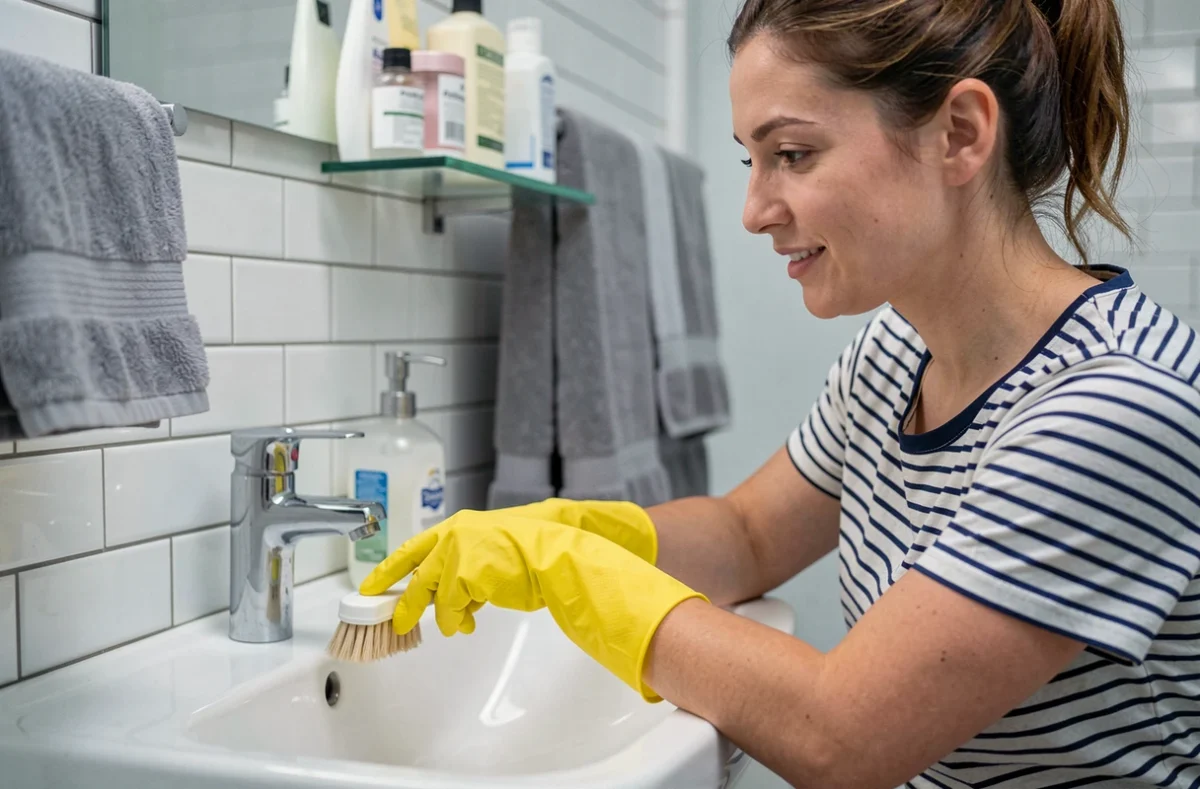
A clean home depends not on how many products you use, but on how regularly you clean and which tools you choose. A dry microfiber cloth traps dust without spreading it, unlike a traditional feather duster. When damp, it removes grease from most kitchen surfaces without detergent.
- Hard floors: wiping with a damp microfiber mop two to three times a week is enough for most households, using diluted neutral detergent
- Bathrooms: clean weekly with detergent; disinfect only if someone in the household is ill
- Kitchen (countertops, sink): clean daily with soap, rinse thoroughly and dry to limit biofilm
- Textiles (curtains, covers): wash monthly or twice a month, depending on exposure to dust and pets
Stocking up on specialist products (one for each room, one for each surface) makes cleaning more complicated without improving the results. Three well-chosen products cover almost all your needs: a neutral detergent, an acidic product for limescale, and a biocidal disinfectant kept for situations that require it.
Regularly clearing surfaces is the most effective way to save time. Fewer items left out mean fewer corners to dust and cleaning takes half as long. A spotless home depends more on consistency than on a chemical arsenal.