
An autistic child enters a doctor’s office. The wait is long, the lights are bright, and verbal instructions keep coming. Without a suitable way to express their pain or needs, the appointment quickly comes to an end.
This scenario is still common, even though digital solutions are available to make every stage of care smoother for people with autism spectrum disorder (ASD). Augmentative and alternative communication (AAC), for example, is no longer limited to an app on a tablet: it combines pictograms, gestures, communication boards, and speech synthesis to support or replace speech.
AAC and healthcare: why the tool alone isn’t enough
Choosing an AAC app for an autistic person is a first step. The real challenge comes next: everyone they interact with needs to know how to use the tool in the same way. A pictogram used at home to say “I’m in pain” must also be understood by the doctor, speech therapist, and educator.
AAC isn’t just for people who are non-speaking. It can also help autistic people who speak or are semi-speaking but temporarily lose the ability to speak when stressed, tired, or experiencing sensory overload. A medical appointment often involves several of these factors.
The national directive issued to medico-social facilities and services in June 2025 takes this approach. It calls for communication needs to be assessed systematically and teams to be trained in AAC tools. The Tsa E-Santé platform lists resources to help professionals and families make this approach part of their daily routine.
Consistent use at home, at school, and in the doctor’s office is key to making any digital tool effective. Without that consistency, even the best software remains a gimmick, unused at the bottom of a bag.
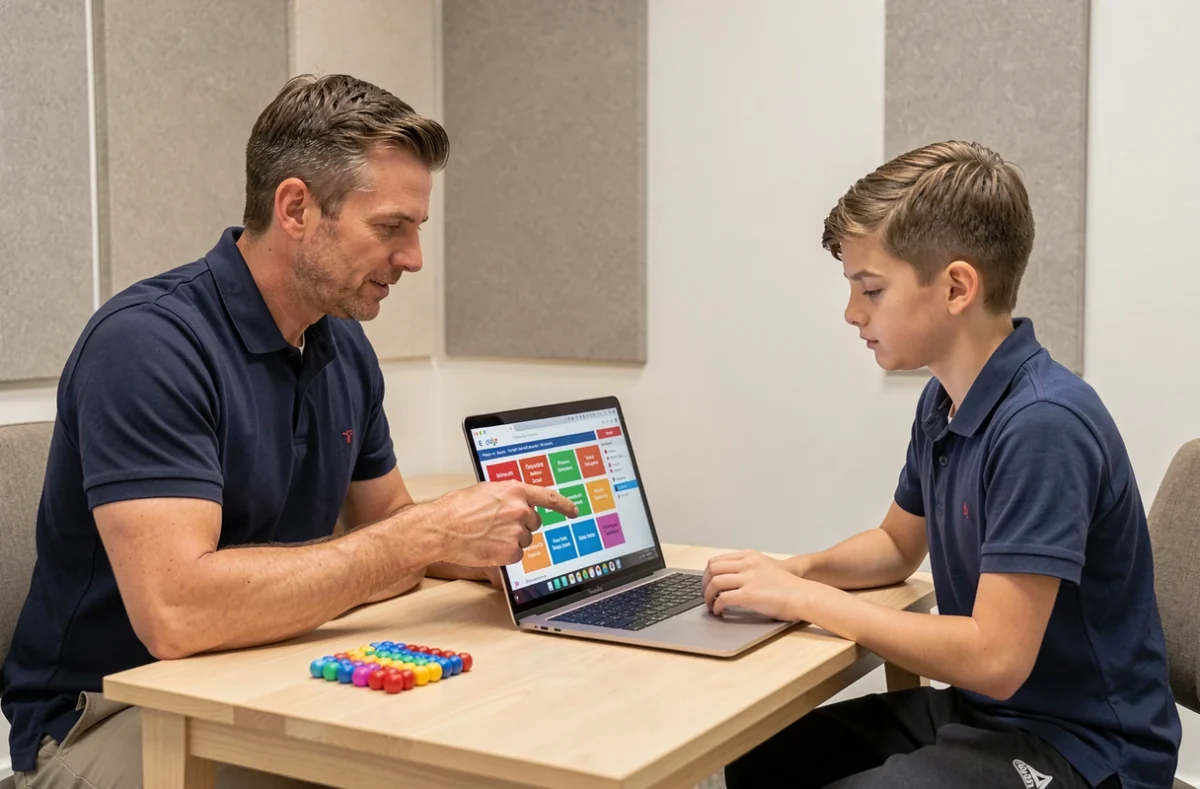
Training healthcare professionals to use digital tools for ASD
Have you ever noticed that general practitioners rarely know how to use a communication board? It’s not a criticism: these tools are almost never covered in healthcare professionals’ initial training.
The challenge is organizational before it is technological. The June 2025 directive calls on medico-social organizations to adopt AAC tools, which means setting aside time for training and supervised practice.
What training should cover
- Reading and using common pictograms (pain, body location, emotions), so healthcare professionals can ask accessible questions during an appointment
- Basic setup of an AAC app on a tablet, so grids can be tailored to the reason for the visit (dental exam, blood test, general consultation)
- Adapting the sensory environment of the doctor’s office (lighting, noise, waiting time) alongside digital tools, because technology can’t make up for an anxiety-inducing setting
Healthcare professionals trained in AAC reduce the need for restraint and sedation during routine care. Digital tools can then support informed consent, even for someone who does not communicate verbally.
Telehealth and ASD: an underestimated benefit
Telehealth removes two major obstacles for autistic people: travel and the waiting room. From the comfort of a familiar environment, a child or adult can attend regular follow-up appointments without experiencing the sensory overload of an unfamiliar place.
This format works particularly well for psychological, speech therapy, and educational follow-ups, where the frequency of sessions matters as much as their content. Maintaining a regular follow-up schedule is often harder than finding a specialist, especially in rural areas.
Telehealth also has a clear limitation: it cannot replace a physical examination. A sensory assessment, dental procedure, or blood draw requires an in-person visit. The challenge is to identify which appointments can take place remotely and which require specific preparation for an in-person visit, using appropriate AAC tools.
Preparing for an appointment with digital visual aids
Visual stories (sequences of images or short videos) can show what to expect during a procedure in advance. The child sees the clinic, the equipment, and the healthcare professional’s actions. This preparation reduces anxiety about the unknown.
Reviewing a visual aid three to five times before the appointment helps make the situation feel familiar. Some professionals send these materials through secure messaging, in line with the principles of e-health for people with ASD.
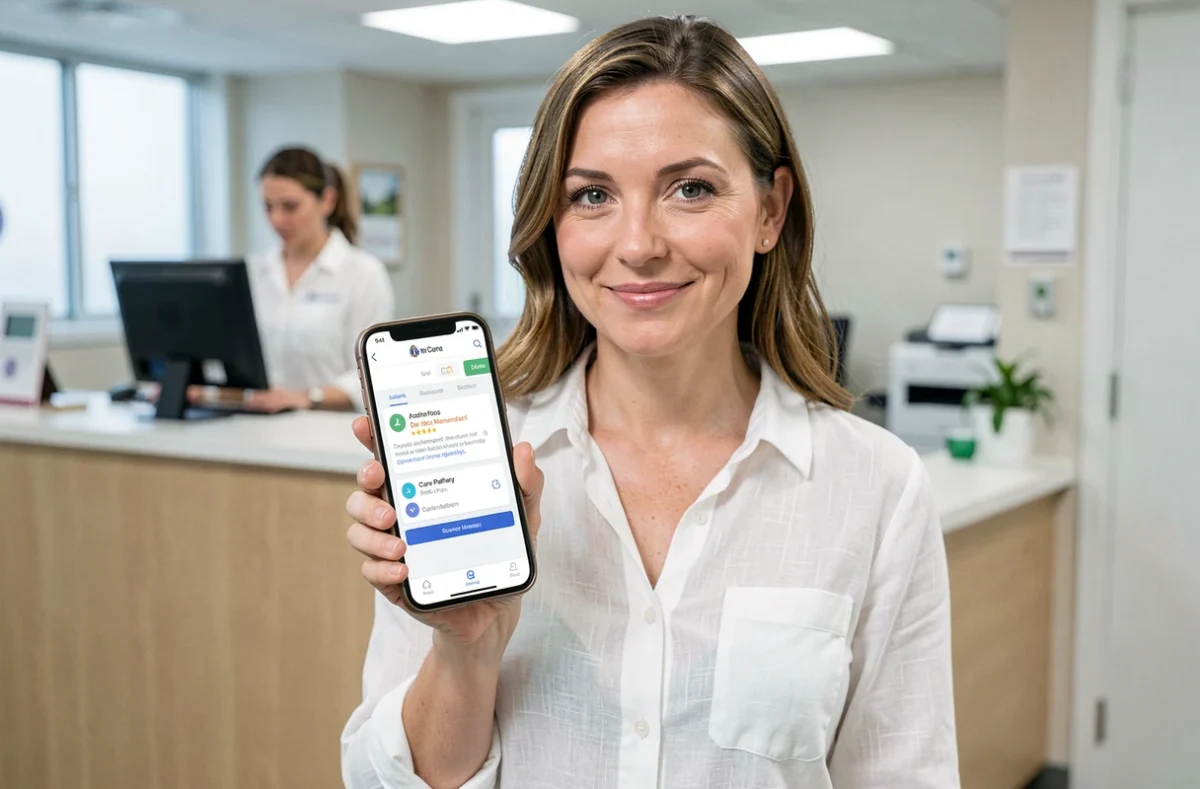
Digital coordination between professionals: the missing link
An autistic person’s care often involves a psychiatrist, speech therapist, psychomotor therapist, special education teacher, and primary care doctor. Without a coordination tool, each person works with only part of the picture.
Digital coordination platforms make it possible to share a common care record. The goal isn’t to add more screens, but to ensure every professional has access to the same information about the patient’s communication needs.
- The communication board used by the family is available to the doctor before the appointment, allowing them to prepare appropriate questions
- Session notes are stored in one place, so parents don’t have to repeat the patient’s history at every new appointment
- Shared alerts (changes in behavior, medication changes) are sent in real time to everyone involved
This coordination doesn’t depend on one miracle software solution. It requires professionals to agree on the tools they use, the formats for sharing information, and confidentiality rules, in compliance with regulations governing health data.
Digital tools can’t replace human connection or clinical expertise. They bring structure to a care journey that would otherwise depend on families’ memories and the goodwill of each professional involved. For autistic people, whose communication needs vary depending on the situation, this structure makes a tangible difference to the quality of care they receive.