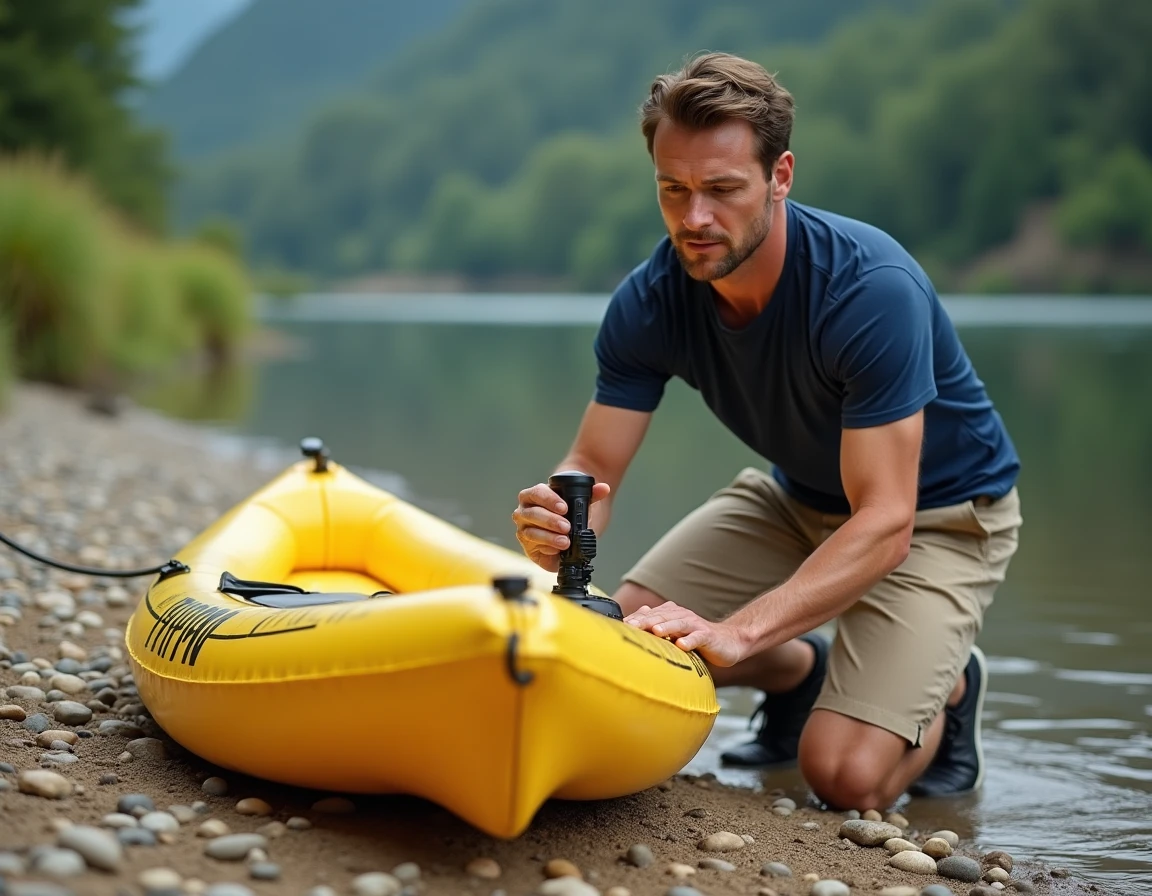
Inflating an inflatable kayak may seem trivial, until the pressure is too low to paddle straight or too high for the safety valve. The choice of pump determines the rigidity of the craft, its lifespan, and the time spent on the shore before launching.
Manufacturers of high-pressure kayaks (dropstitch type) sometimes condition the validity of their warranty on the use of the provided or approved pump, arguing that their pressure gauges and valves are calibrated together. Therefore, this topic deserves more careful examination than just a quick glance at the accessories section.
Pressure Gauge and Inflation Pressure: The Technical Point Many Overlook
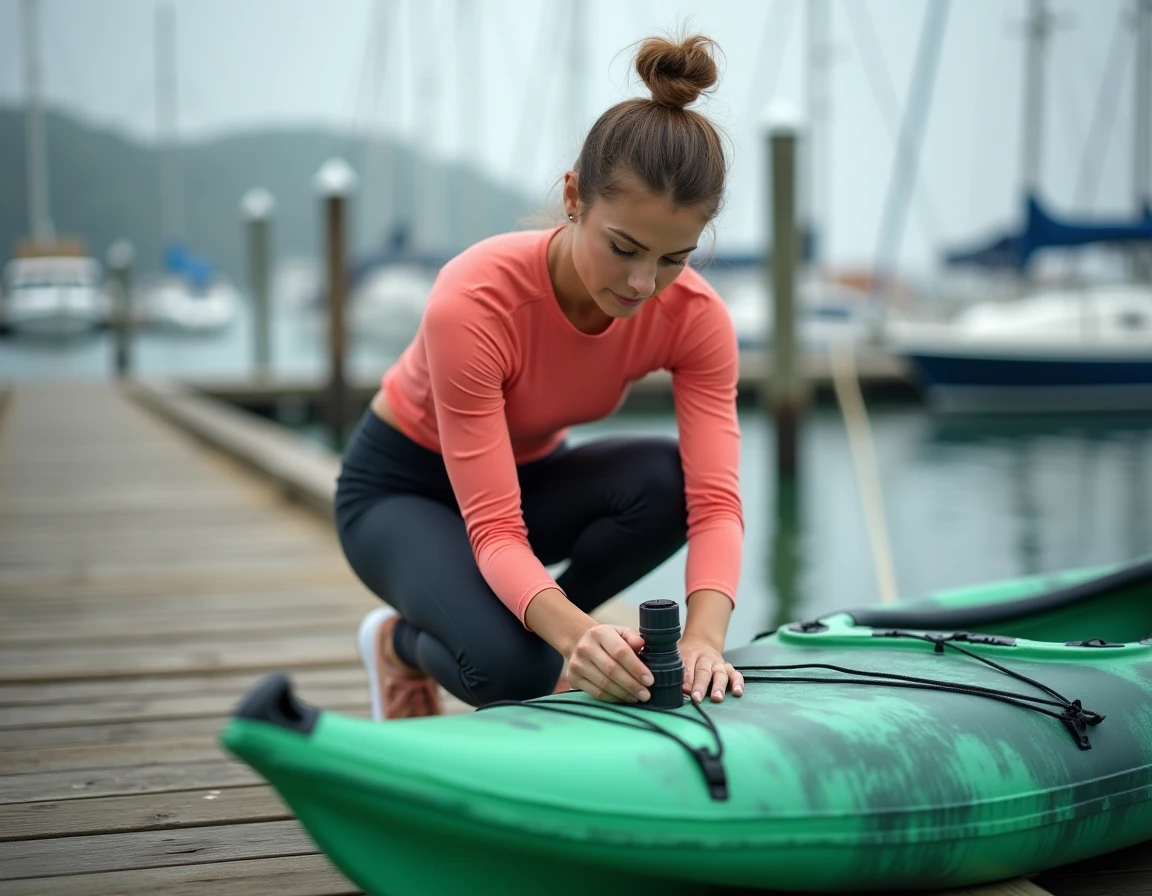
The recommended pressure varies depending on the type of inflatable kayak. A classic PVC model with separate chambers inflates at low pressure, often around a few PSI. A dropstitch kayak, being more rigid, requires significantly higher pressure to achieve its optimal shape.
The real issue lies with the pressure gauge. Since 2023, kayakers and SUP enthusiasts have documented a increase in incidents related to poorly calibrated gauges. An inaccurate gauge may indicate a correct value while the kayak is under-inflated (loss of rigidity, difficulty maintaining course) or, conversely, over-inflated (risk of bursting a hose or stressing the pressure relief valve).
A gauge integrated into a budget pump does not offer the same reliability as a separate pressure controller. Checking the consistency between the two, at least during the initial uses, helps avoid these discrepancies. Knowing how to choose a pump for an inflatable kayak starts with this question of accuracy, long before the manual versus electric debate.
Manual Pump or Electric Pump for Kayak: What Usage Reveals
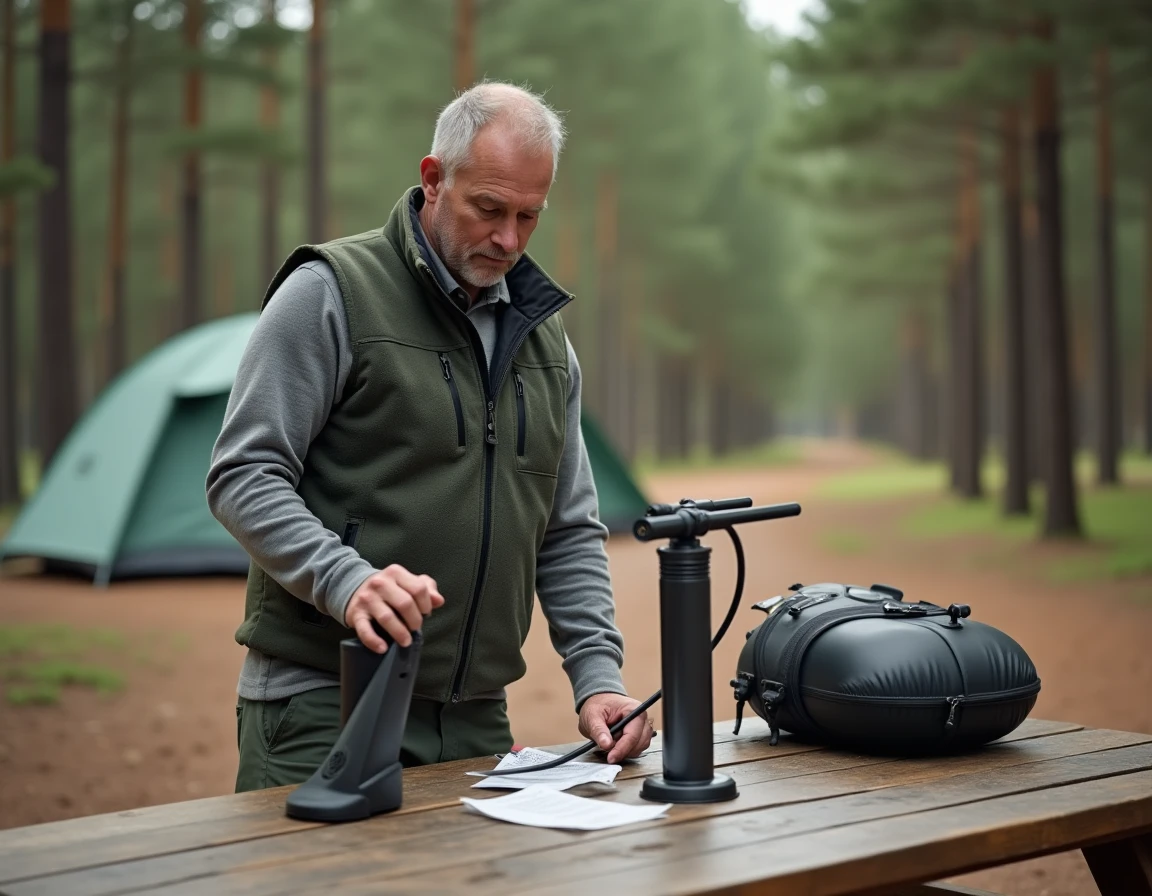
The double-action manual pump remains the default choice. It pushes air on both the push and pull strokes, reducing inflation time compared to a single-action pump. It works anywhere, never runs out of battery, and is lightweight in a transport bag.
The electric pump, powered by 12 V from a cigarette lighter or built-in battery, is appealing for its convenience. Inflation requires less physical effort, and the automatic shut-off at the target pressure seems reassuring. However, field reports indicate a recurring flaw: beyond about 10 PSI, the motor overheating triggers the thermal safety. On a high-pressure kayak or when inflating in hot weather, one must take breaks, which partially negates the time savings.
Foot Pump: The Overlooked Compromise
The foot pump provides a decent flow for low-pressure kayaks and engages the legs rather than the arms. It takes up little space when folded. For a dropstitch kayak, it shows its limits: reaching the required pressure requires prolonged effort, and the connection can easily detach under high pressure.
Valve Compatibility and Adapters: Check Before Buying
Not all inflatable kayaks use the same type of valve. There are mainly three families:
- Boston valves, common on entry-level models and recreational kayaks. They accept most standard manual pump nozzles.
- Halkey-Roberts valves (military type), frequent on mid-range and high-end kayaks. They require a specific adapter, often provided with the pump or kayak.
- Proprietary high-pressure valves, used by some dropstitch kayak manufacturers, which sometimes mandate the exclusive use of their own pumps to maintain the manufacturer’s warranty.
Buying a pump without checking compatibility with its valves is a common mistake. Some universal adapter kits cover most cases, but not all. It’s better to precisely identify the valve model of your kayak before ordering.
Inflation in the Field: Mistakes That Damage Equipment
The context of inflation is as important as the pump itself. Inflating a kayak in full sun on hot sand exposes it to progressive over-inflation: air expands with heat, and pressure rises after setup. Inflating in the shade and adjusting the pressure once the kayak is in the water remains the safest method.
The surface on which you inflate also deserves attention. An abrasive surface (gravel, shells, rough concrete) can damage the bottom of the kayak during inflation, when the craft stretches and rubs. Using a tarp or inflating on grass protects the seams and coating.
Order of Inflation for Chambers
On a kayak with multiple chambers, the order of inflation is not trivial. Starting with the bottom, then inflating the side chambers allows the kayak to take its natural shape without distorting the seams. Finishing with the seat and inflatable accessories avoids having to readjust everything.
Do not tighten the valve caps fully before reaching the desired pressure in all chambers: this facilitates adjustments and avoids reopening a valve that is already under pressure.
Pump Maintenance and Lifespan
A manual pump requires little maintenance, but the piston seal wears over time. When inflation becomes laborious despite normal effort, it is often the seal that is leaking, not a technique issue. Replacing the seal is inexpensive and extends the pump’s life by several seasons.
For electric pumps, storing them away from moisture and extreme temperatures preserves the battery and electronics. Rinsing the adapters with fresh water after a saltwater outing prevents corrosion of the connections.
Deflating deserves the same attention as inflating. Opening the valves in reverse order and allowing the air to escape naturally before folding reduces stress on the seams. Forcing the folding of a kayak that is still partially inflated is one of the most documented causes of seam delamination by users.