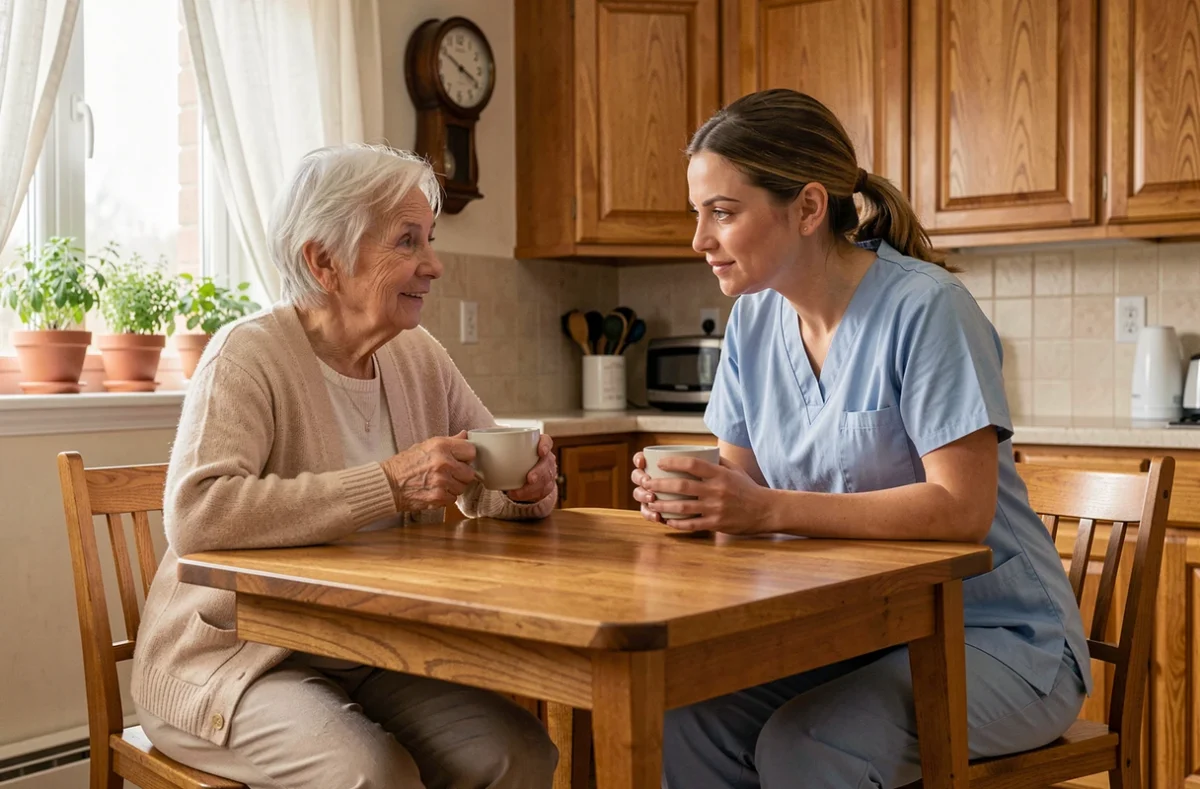
When an elderly person begins to have difficulty getting up alone or regularly forgets to take their medication, the question of home care arises in very concrete terms. Organizing appropriate assistance is not just about finding someone for housework: it requires coordinating caregivers, choosing a legal framework, and anticipating the evolution of care needs.
Home autonomy services: what the reform changes on the ground
Since 2023, the former SAAD, SSIAD, and SPASAD have been replaced by home autonomy services (SAD). On paper, the merger simplifies the procedures. In practice, it imposes a new obligation: a SAD classified as “assistance” must now provide a referral procedure to a healthcare professional as soon as the person’s condition changes.
In practical terms, if the caregiver notices a loss of mobility or cognitive decline, the service can no longer simply report the situation to the family. It must initiate a documented referral protocol. This coordination between assistance and care is the most underestimated operational point of the reform.
It is observed that home support and assistance for the elderly now covers a much broader scope than just assistance with daily activities. The challenge is to not discover this obligation on the day a health problem arises.
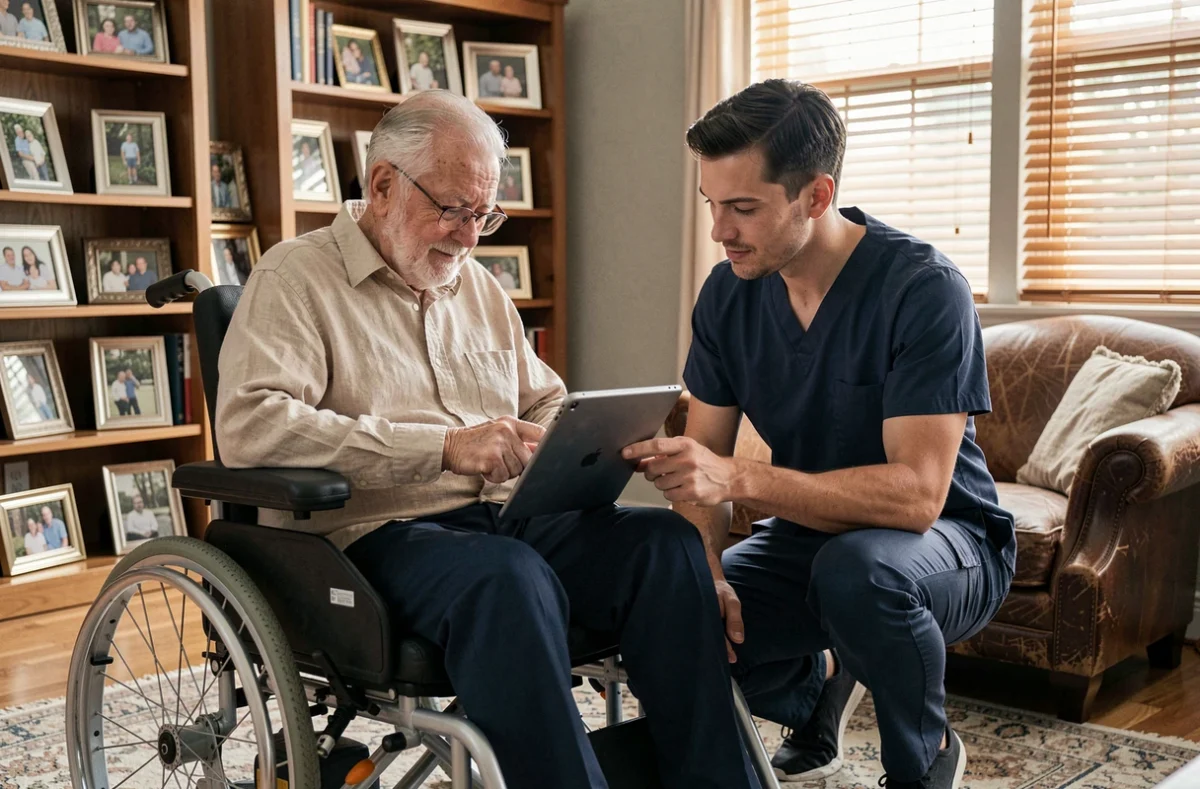
Minimum home care rate and actual out-of-pocket expenses
Decree No. 2024-2 of January 2, 2024, has modified the setting of the national minimum rate for home care services. Previously defined by an annual order, this rate is now automatically indexed via a formula set out in Article D. 314-130-1 of the Social Action and Families Code.
This minimum rate concerns the amount covered under the APA or PCH. It does not cap the price charged to the beneficiary. A service provider can therefore charge above this rate, and the difference remains the responsibility of the elderly person or their family.
Factors affecting the final bill
- The chosen mode of intervention (provider, representative, or direct employment) significantly alters the net hourly cost, with the provider being the most expensive but also managing all employer obligations
- Night, weekend, or holiday hours incur surcharges that can double the cost of a standard hour
- The GIR level assigned during the evaluation determines the volume of hours funded by the APA, and a GIR that is too high (overestimated autonomy) mechanically reduces coverage
The actual out-of-pocket expenses vary greatly from one situation to another. Comparing quotes from several services before signing remains the only way to objectively assess the expense.
APA at home: the concrete pitfalls of the care plan
The personalized autonomy allowance finances part of the home care hours, but the care plan established by the departmental medico-social team sets a monthly cap. If needs increase between two evaluations, one ends up paying out of pocket or reducing interventions.
The first reflex: request a revision of the plan as soon as a change occurs (fall, hospitalization, cognitive decline). Feedback varies on the re-evaluation timelines depending on the departments, but a written request at least triggers an obligation to respond.
Provider or direct employment: a choice that commits
With a service provider, the caregiver is an employee of the service. The family has no administrative management to handle. With direct employment (via CESU, for example), one gains in scheduling flexibility and the cost is often lower, but one becomes an employer with all the associated legal obligations: employment contract, pay slips, paid leave, potential dismissal.
The representative mode constitutes a middle ground: a service recruits and manages the administrative tasks, but legally the elderly person remains the employer. This nuance has direct consequences in case of disputes or contract termination.

Identifying signals that require readjusting home care
A fixed care plan is an unsuitable care plan. On the ground, several signals should trigger a quick readjustment:
- Unprepared or uneaten meals accumulating, indicating that meal delivery or cooking assistance is no longer sufficient
- A decline in personal hygiene despite the caregiver’s visits, which may indicate a need for nursing care rather than just assistance with bathing
- An increasing social isolation, with refusal to go out or open the door, which sometimes requires psychological support or tele-assistance
- Repeated domestic incidents (burns, falls, forgetting the gas) raising the question of home modifications even before considering the volume of hours
Each signal must be documented in writing and sent to the coordinating service or the department. This documented follow-up justifies a re-evaluation of the GIR and an increase in the care plan.
When home care is no longer sufficient
The SAD reform requires services to refer to care when the situation demands it. However, there is no regulatory obligation guaranteeing immediate support. Between the report and the intervention of a SSIAD or a private nurse, several weeks may pass depending on the region.
Anticipating this delay means identifying from the start the local healthcare professionals and including them in the network of the supported person. A primary care physician informed of the care plan can significantly expedite the process.
According to DREES, the number of beneficiaries of social home care has declined for the first time since 2020, according to provisional data published in September 2026. This decline raises questions: it may reflect better maintenance of autonomy, but also difficulties in accessing services in certain departments. Final data is expected by the end of 2026.
Organizing the home care of an elderly person means assembling pieces that are constantly moving. The regulatory framework evolves, needs change, and caregivers rotate. The only reliable constant remains regular, documented follow-up shared between the family, the care service, and the primary care physician.