
Technological evolution has made access to a high-speed internet connection essential. Fiber optic cable currently offers the maximum speed, but it is not accessible to everyone due to its high cost and the infrastructure required for its installation. However, several alternatives exist, providing viable solutions for those who cannot benefit from fiber. These options include satellite connections, high-speed wireless networks, and DSL links. Although these alternatives are slower than fiber, they can provide sufficient bandwidth for most common internet uses.
Fiber Optic: Guaranteed Speed and Stability
In the current context of rapid digitization and an ever-growing demand for connectivity, a question often arises: ‘Does fiber replace the telephone cable?’ This inquiry stems from the massive adoption of technology based on fiber optics, renowned for its lightning-fast speed and undeniable stability.
However, it would be inaccurate to claim that the intention behind the advent of fiber optics was directly linked to its potential role as a substitute for traditional telephone cable. Some are tempted by this hypothesis due to the astonishingly high speeds offered by fiber optic connections, which seem to render ADSL networks obsolete. Nevertheless, this postulate remains a supposition.
To provide an accurate opinion regarding our initial question ‘does fiber replace the telephone cable?’, it is essential to highlight that a massive deployment of fiber optic networks requires significant financial investments. These costs can be challenging to recoup in sparsely populated areas where existing telephone lines are more than sufficient for local needs. As a result, maintaining the use of telephone cable alongside often proves to be more economically viable.
Thus, when asking: ‘does fiber replace the telephone cable?’ The answer would not be as simple as a definitive yes or no but rather a nuanced proposition. Fiber optics, despite its extraordinary performance in terms of speed and reliability, is not viewed as a total replacement for telephone cable but more as an alternative or complement depending on geographical situation, specific needs, and available infrastructure.
In summary, even though the exact term is ‘does fiber replace the telephone cable?’, it is not a question with a binary answer but rather a debate that finds its resolution in the coexistence of both technologies in our current digital market. They will likely continue to coexist to effectively and flexibly meet the diverse needs of internet users.
4G and 5G: Wireless Alternatives for Fast Connection
Technological advancements in telecommunications have also given rise to wireless alternatives for high-speed internet connection. Among these are 4G and its potential successor, 5G.
4G (fourth generation) has revolutionized the way we surf the internet by offering download speeds comparable to those of fiber optics. Thanks to this mobile technology, it is now possible to quickly access online content and enjoy a smooth experience while watching videos or streaming music.
Despite its impressive performance, 4G still has certain limitations. Indeed, it remains dependent on existing cellular infrastructures and may encounter difficulties in rural areas that are less well-served by operators. With the constant emergence of new bandwidth-hungry uses such as high-resolution online gaming or virtual reality, even good 4G connectivity can reach its limits.
This is where the promising technology of 5G (fifth generation) comes into play. With a theoretical speed of several gigabits per second and minimal latency (<1 millisecond), this new standard represents a significant qualitative leap compared to its predecessor. The increased processing capacity will not only provide ultra-fast web browsing but also support the massive advent of connected devices and the Internet of Things. The low latency of 5G also paves the way for innovations such as autonomous vehicles and remote surgeries.
Despite its many advantages, the massive deployment of 5G will not come without constraints. It is important to note that it is an expensive technology that requires considerable investment in infrastructure to be deployed on a large scale. Some studies have raised concerns about potential adverse effects on the environment and human health related to this new radio standard.
If you are looking for an alternative to fiber cable for your high-speed internet connection, you have several wireless options. 4G already offers a satisfactory experience in many cases but may encounter its limits, especially in rural areas that are less well-covered by operators. Meanwhile, 5G promises a revolution in terms of speed and performance with its exceptional bandwidth and low latency. However, it should be noted that its massive deployment remains dependent on significant financial investments as well as unresolved environmental and health issues.
Satellite: High-Speed Access Everywhere
In our quest for alternative solutions for a high-speed internet connection, satellites also hold a prominent place. Thanks to satellite communication technology, it is now possible to access the Internet anywhere in the world.
Satellite solutions offer high-speed access even in the most remote and isolated regions. They present a real boon for those living in the countryside or in geographically difficult-to-access areas. By using satellites in low Earth orbit (LEO) or geostationary orbit (GEO), these systems enable stable, fast, and reliable connections.
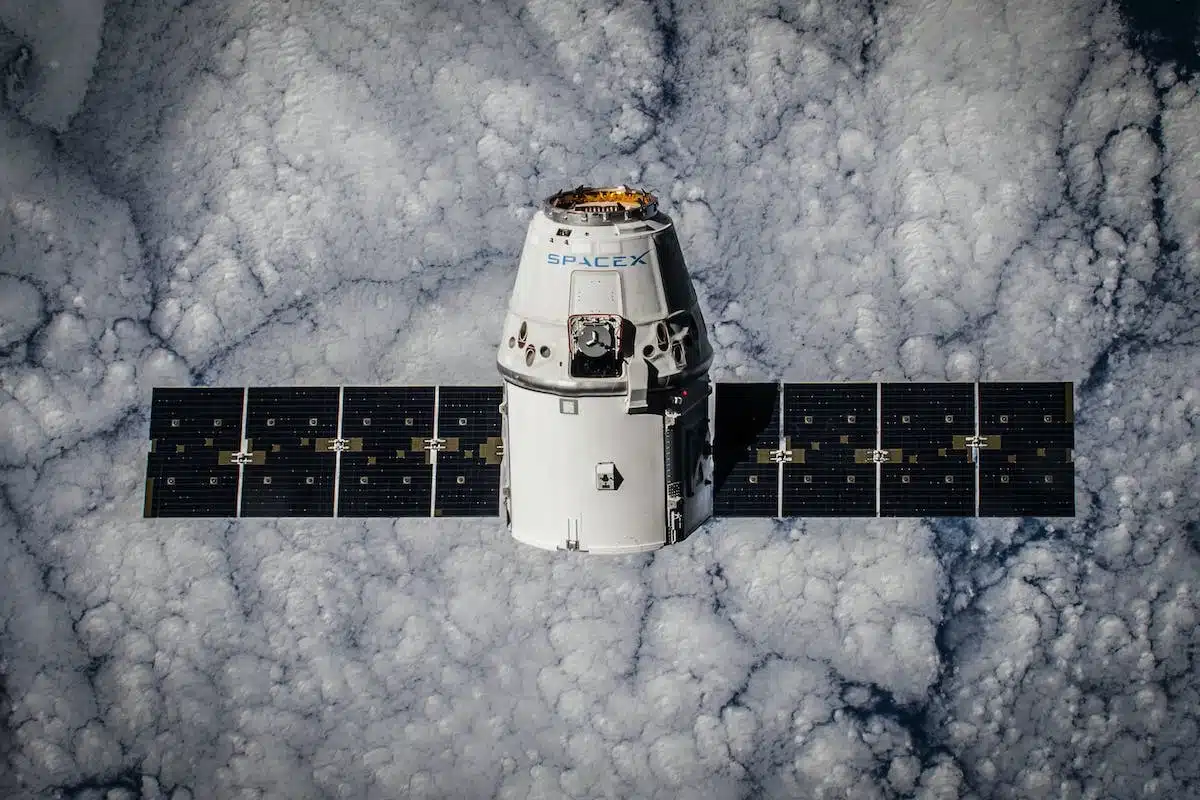
The leading pioneering company in the field of satellite internet connections is SpaceX with its Starlink project. This is a global network composed of thousands of small LEO satellites that form a constellation around the Earth. This space infrastructure offers enormous potential to provide high-speed internet access to the most remote corners of the globe.
Other major players such as OneWeb, Amazon Kuiper, and Telesat are also working on deploying their own satellite constellations to offer services similar to those provided by Starlink. The competition among these different companies should promote the continuous improvement of this technology and lead to a gradual decrease in the costs associated with satellite internet subscriptions.
While satellite solutions undeniably represent a significant advancement in connecting all the world’s inhabitants to high-speed internet, they are not without challenges. Potential issues include high latency due to the distance traveled by signals between the satellite and the user, which can certainly affect applications requiring real-time interaction such as online gaming.
It should be noted that these solutions may not fit all budgets. Initial installation costs can be relatively high, and some monthly subscriptions may also represent a significant financial investment. It is essential to consider these aspects before turning to satellite internet connections.
For those looking for an alternative to fiber cable to benefit from a high-speed internet connection everywhere, satellite solutions offer interesting prospects. With ambitious projects like Starlink and other satellite constellations in development, it is highly likely that this technology will continue to improve in the coming years.
Cabled Networks: DSL and VDSL for Reliable Connection
In our exploration of alternatives to high-speed internet connection via fiber cable, we must not overlook the existing cabled networks. Among them, we find DSL (Digital Subscriber Line) and its improved version, VDSL (Very High Bitrate Digital Subscriber Line).
DSL uses traditional copper telephone lines to transmit digital data. Although this technology is older and less efficient than fiber optics, it remains a viable option in certain situations. It offers a sufficient bandwidth for standard web browsing and also allows for services such as video on demand or standard quality streaming.
If you are looking for a faster internet connection with higher bandwidth, then you should consider the VDSL option. This technology also relies on copper telephone lines but benefits from technical improvements that allow it to achieve higher speeds than traditional DSL.
Thanks to advancements in VDSL2 (the latest generation of VDSL), users can now enjoy speeds of up to 100 Mbps for downloads and 50 Mbps for uploads. This represents a significant improvement over classic DSL.
Another major advantage of VDSL is that it does not require the installation of new cables or significant infrastructure. It simply works through existing connections already present in homes connected to the telephone network.
It should be noted that due to its reliance on copper telephone lines, VDSL can be subject to signal disruptions. The quality of the connection may vary depending on factors such as the distance between your home and the network node or electromagnetic interference from other devices.
It is important to emphasize that access to VDSL depends on the infrastructure already present in your geographical area. Not all households necessarily benefit from this technology, especially in rural areas where cabled networks are less developed.
Careful consideration should be given to the costs associated with DSL and VDSL subscriptions. Although they are generally less expensive than fiber optics, they can still represent a significant monthly investment for some users.
Although DSL and VDSL cannot compete with the speed and stability offered by fiber optics, they remain interesting alternatives for those who wish to benefit from a high-speed internet connection without access to a high-performing fiber cable network. Before making an informed choice about your internet provider, we strongly recommend evaluating your specific needs as well as the availability of different technologies in your area.
PLC: Powerline Communication Connection
In our quest for effective alternatives to fiber cable for high-speed internet connection, it is important to mention powerline communication (PLC) technologies.
PLC utilizes the existing home electrical network to transmit digital data. It works by using electrical cables as a transmission medium, eliminating the need for new cables or costly infrastructure.
The main advantage of PLC is its ease of installation. You simply need to plug a PLC adapter into your wall outlet and connect another adapter to your router or modem. Once this is done, you can enjoy a fast and stable internet connection throughout the house without having to run additional cables.
In terms of speed, PLC can theoretically reach speeds of up to 1 Gbps, but in practice, performance may vary depending on various factors such as the quality of the electrical network and the distance between adapters.
Choosing the Best Alternative According to Needs and Constraints
In this relentless quest to find a worthy alternative to the high-speed internet connection provided by fiber cable, it is crucial to consider the specific needs and constraints of each user.
If you are looking for a solution that guarantees optimal performance without compromising the stability of your connection, then the best alternative remains undeniably fiber cable. This technology offers ultra-fast bandwidth as well as minimal latency, making it the ideal option for speed-hungry users who demand quality service.
If you face logistical or budgetary constraints such as the physical impossibility of installing fiber cable in your residence or prohibitive costs associated with deploying a fiber optic network, there are still some interesting alternatives.
One of these is satellite. Although it may be considered an expensive option requiring specific equipment, including a satellite dish pointed at the sky to capture the satellite signal, it does allow access to the internet even in remote areas where no other technology is available. This can therefore be a good solution for those living in remote and isolated regions.
Another promising alternative is offered by mobile operators via their 4G network (and soon 5G). Thanks to constant technological advancements to improve their coverage and enhance their speeds, it is now possible to benefit from a reliable high-speed connection using a 4G box. This can be particularly interesting for people living in urban areas where mobile network coverage is excellent.
Let’s not forget PLC (Powerline Communication) which utilizes the existing electrical network to transmit digital data. This technology has the major advantage of simple and quick installation, without the need for new cables or costly infrastructure. Although its performance may vary depending on factors such as the quality of the home electrical network or the distance between PLC adapters, it remains a viable solution for those looking to avoid the costs and hassles associated with fiber optic connections.
The choice of the best alternative to fiber cable will therefore depend primarily on the specific needs of each user as well as the constraints they encounter. Whether it is satellite providing connectivity even in remote locations, the 4G/5G mobile network ideal for urban areas, or PLC allowing for easy installation without running new cables: all these solutions offer undeniable advantages that must be considered when seeking to meet the needs for high-speed internet connection.