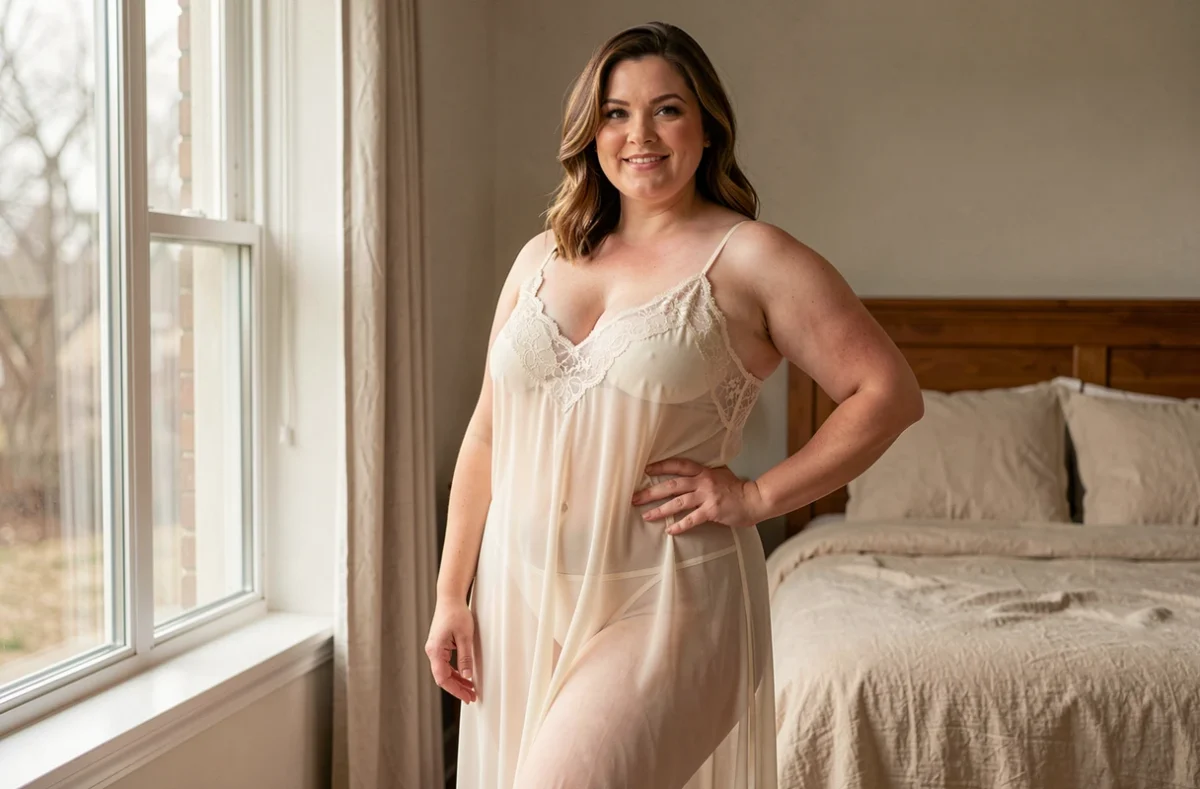
The choice of a plus-size transparent nightgown relies on technical criteria that most lingerie guides overlook: the under-bust construction, the type of transparency (tulle, mesh, openwork lace), and the compatibility between the garment’s structure and the weight of the bust. A seductive piece that is poorly designed will end up in a drawer after two wears.
Structure and support of a plus-size transparent nightgown
A transparent nightgown does not mean lack of structure. The support depends on the under-bust band, not the straps. On a generous bust, thin straps bear the entire load and dig into the shoulders. The under-bust band, when it is wide enough and elastic, distributes the weight across the torso and stabilizes the bust without underwires.
We recommend checking three points before purchase: the width of the band (at least two to three centimeters for a D cup and beyond), the presence of side reinforcement seams, and the height of the back. A back that is too low slips as soon as the arms are raised. A mid-high back, with a hook or adjustable elastic, anchors the piece correctly.
Wire-free models are suitable as long as the construction compensates with cutouts and panels. A cup formed by two or three sewn lace panels offers a natural shape. A flat cup, simply placed on the bust, flattens the shapes instead of enhancing them. By browsing the selection of plus-size nightgowns on Lingerie Dément, you will notice these construction differences on the product sheets.
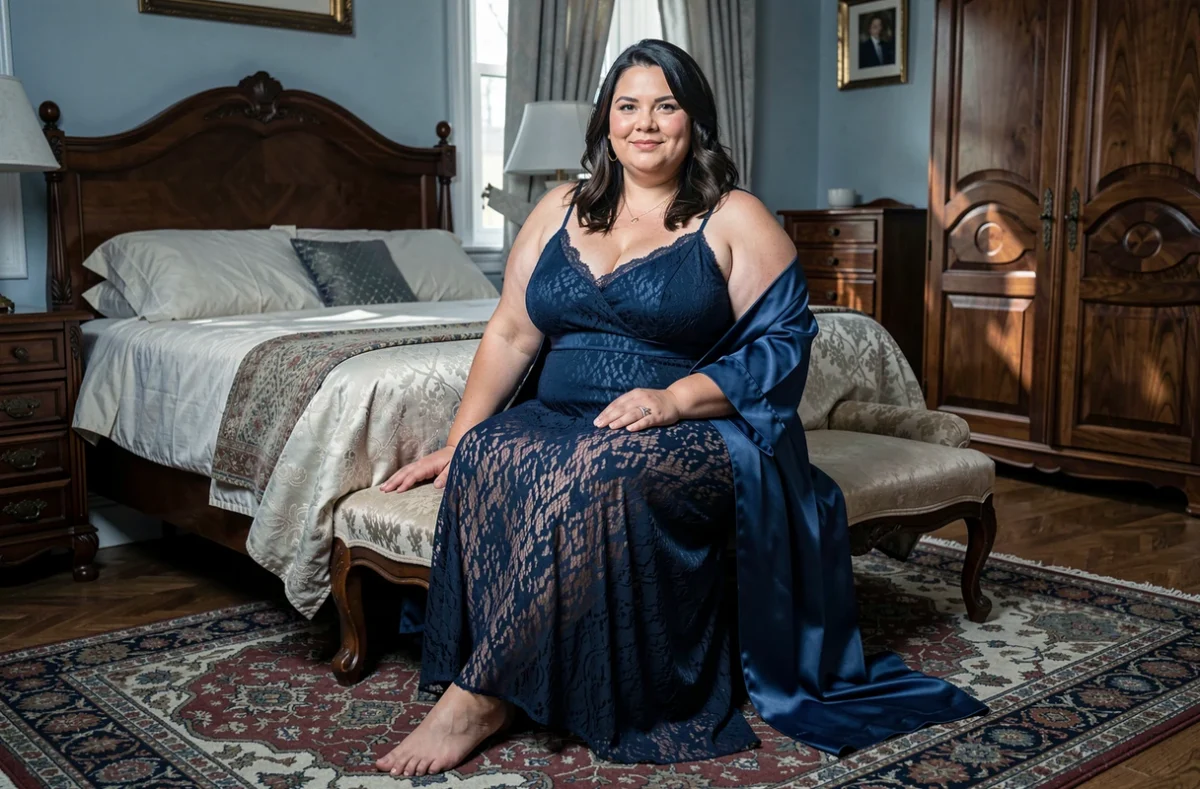
Lace, tulle or mesh: which transparency for which silhouette
Not all transparencies produce the same visual effect. The distinction matters more than just the choice between “transparent” and “opaque”.
- Openwork lace creates a play of shadow and light that softens the contours. It suits body types that desire a partial veil effect, but its thickness varies depending on the thread used (polyamide, cotton, blend).
- Fine tulle, almost invisible, exposes more skin. It works better as panels (décolleté, back, sides) than as a full panel, where it can appear fragile and lack support in stressed areas.
- Stretch mesh, more durable, hugs the curves without sagging. Its regular knit provides a uniform look, less romantic than lace but more durable and easier to maintain.
On a plus-size silhouette, combining two types of transparency in the same nightgown yields a more flattering result than a single fabric. A bust in lined lace paired with a draped mesh belly, for example, structures the top and lightens the bottom.
Check the composition before purchase
In France, the fiber composition must be clearly stated on the product sheet or label. 100% polyamide lace does not behave like lace blended with elastane. Polyamide alone offers durability but little stretch. With a percentage of elastane, the piece moves with the body and returns to its shape.
We observe that the mention of “lace” on a product sheet does not inform about the quality of the weave. A close-up shot of the pattern, when available, reveals more than the marketing description.
Care for a transparent lace nightgown
Care conditions the lifespan of the piece as much as its construction. A transparent nightgown washed at high temperatures or put in the dryer loses its elasticity after a few cycles. Lace fibers catch on zippers or Velcro from other garments in the drum.
Recommendations converge towards a simple protocol:
- Wash at low temperature, in a closed lingerie bag.
- No fabric softener, which clogs synthetic fibers and reduces their breathability.
- Lay flat to dry, never in the dryer. Heat distorts the under-bust band and relaxes the elastics.
This protocol applies to synthetic lace as well as tulle or mesh. Silk nightgowns require even gentler treatment (hand wash or strict silk program), making them a less practical choice for frequent wear.
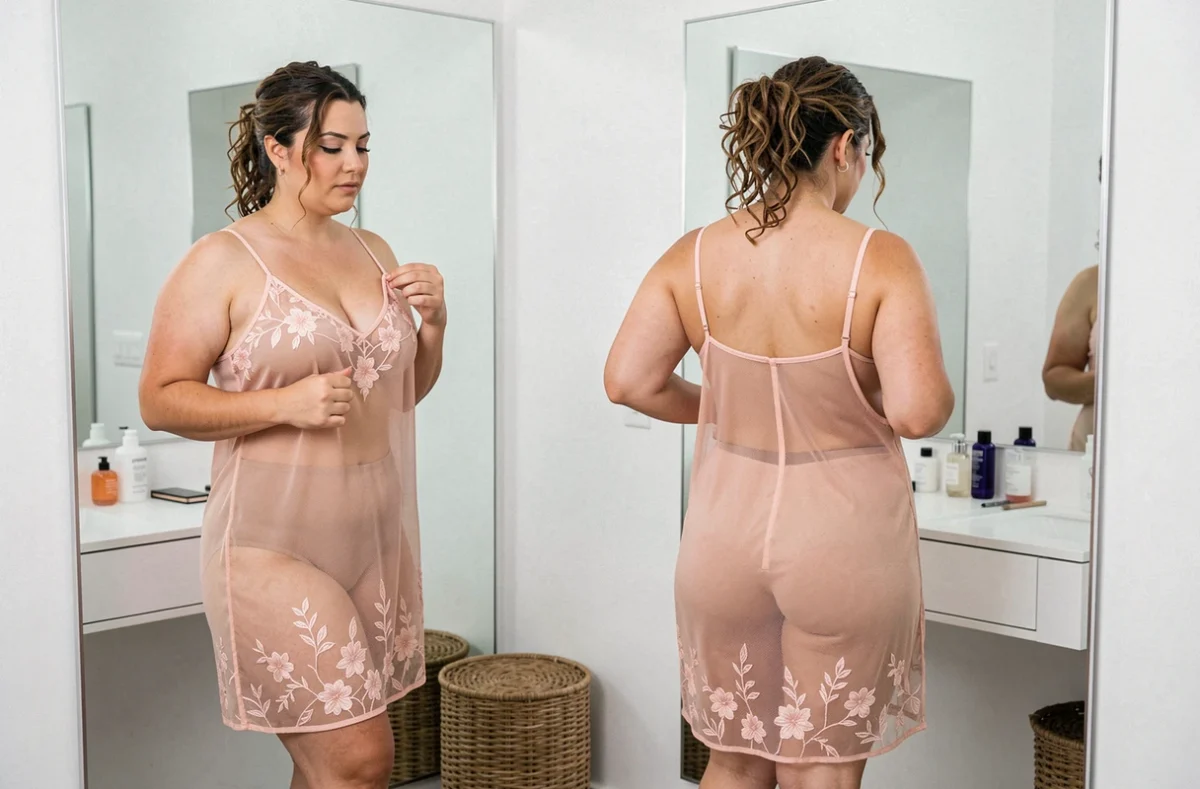
Length and cut: adjusting the nightgown to your body shape
Mid-thigh length is the most versatile compromise in plus sizes. It reveals the legs without riding up when sitting, unlike very short models that require a weighted hem or sufficiently heavy fabric to stay in place.
The empire cut, with a seam placed just under the bust, frees the belly and hips. It suits both O and A body shapes. However, an empire cut on overly fluid fabric creates a “maternity dress” effect that many women wish to avoid. A fabric with a minimum of hold (double-layer mesh, slightly thick satin) maintains the line of the nightgown without clinging.
The straight cut, rarer in transparent lingerie, works on H silhouettes. It glides along the body without marking the waist, which suits women who do not want to accentuate that area.
Straps and neckline
Adjustable straps are a minimum, not a bonus. A difference of two centimeters in strap length changes the entire fall of the bust. V-necklines visually elongate the torso and suit generous busts. Straight or balconette necklines produce a more covering effect that can be reassuring, but they require a more structured under-bust band to compensate for the lack of depth in the cup.
The choice of a plus-size transparent nightgown ultimately rests on a balance between transparency, structure, and material. A model that ticks these three boxes remains comfortable, flattering, and durable, justifying spending a few extra minutes on the technical sheet before confirming the cart.